Getting started · 3 min read · 21+ US · 18+ UK
Should red wine be chilled? A little, and not like your white
Most reds taste right a bit below room temperature, and light reds go a little colder. The numbers, what cold does to taste, and a test with no wine at all.
The short answer
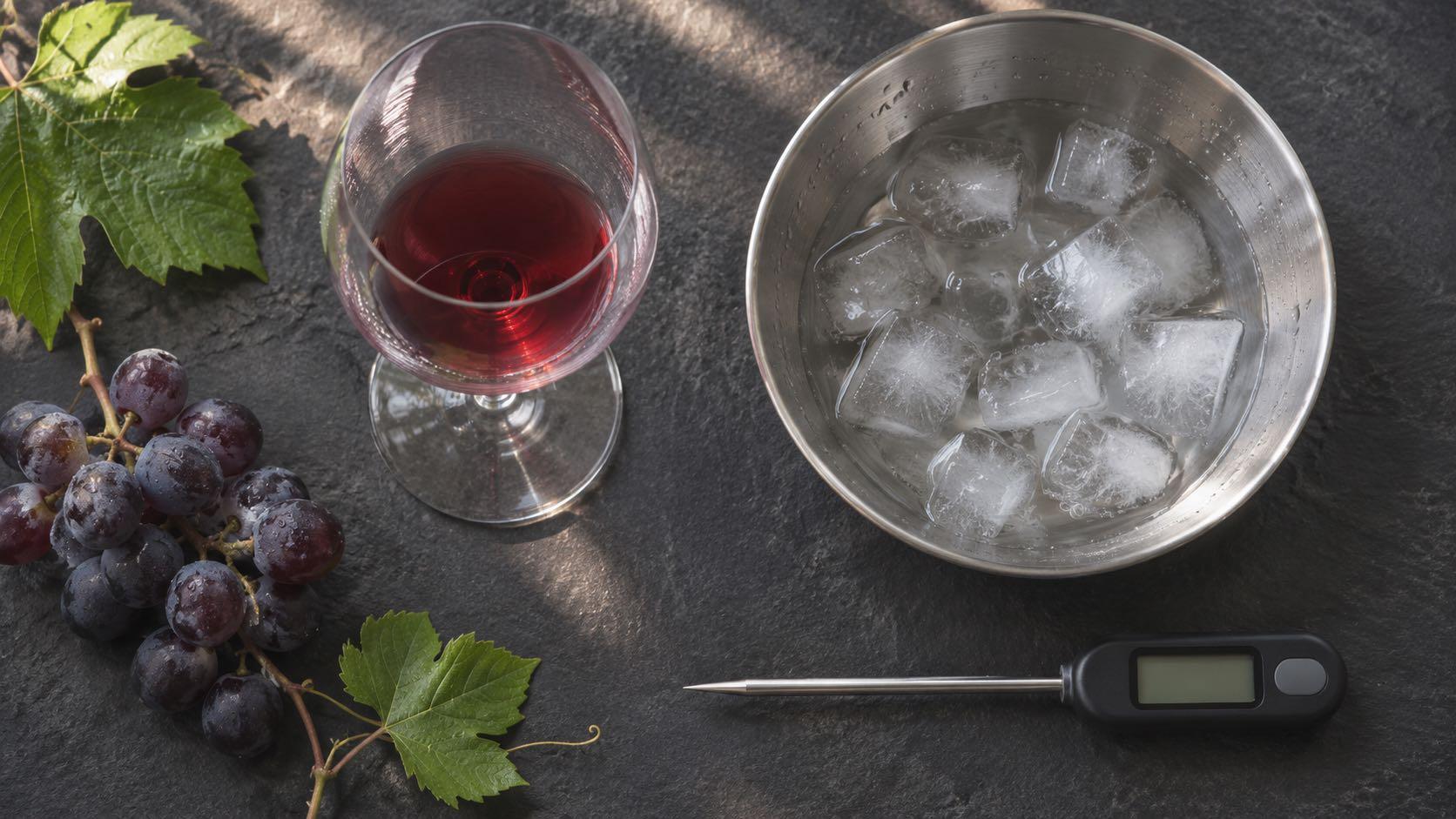
Yes, a little. Most red wines show well at about 59 to 64°F (15 to 18°C), which is cooler than a heated room. Reds with a light body can go a step colder, lightly chilled, while white, rosé and sparkling wines are served colder still.[1],[2],[3]
Room temperature is the wrong room
The old advice says to serve red wine at room temperature. But with central heating, rooms are often warmer than wine likes. Room temperature usually means about 68°F (20°C), while the wine version is 59 to 64°F (15 to 18°C).[1]
A food scientist writing in a research journal gives the same range for red wine: 59 to 64°F (15 to 18°C), slightly below room temperature. For most whites and rosés, the range is 39 to 50°F (4 to 10°C), just above fridge temperature.[3]
If it is too warm, a red can lose its freshness and taste muddled. If it is too cold, it can taste thin and harsh.[1]
Which reds like it cooler
Body decides it. Body is how heavy a wine feels in your mouth, like skim milk next to whole milk. The WSET beginner course sorts wines into temperature groups by style and body:[2]
- Reds with medium or full body: room temperature, meaning the cool wine version.[2],[1]
- Reds with light body: lightly chilled, the same step as a white with full body.[2]
- Whites with full body: lightly chilled. WSET's serving guide puts that at around 50 to 55°F (10 to 13°C).[2],[1]
- Whites and rosés with light or medium body: chilled.[2]
- Sparkling and sweet wines: well chilled. Below about 43°F (6°C), though, cold can mask the flavor of white, rosé and sparkling wines.[2],[1]
How cold to serve, by style (5 is coldest; ranked, not to scale)[2]
- Red, medium or full body
- Red, light body
- White, full body
- White and rosé, light body
- Sparkling and sweet
What cold does to a red
Cold holds smell back. The aroma molecules in wine escape into the air more slowly when the wine is cold, so a chilled wine smells and tastes less intense.[3]
Your sense of taste is sharpest at about 68 to 93°F (20 to 34°C). Below that, sweetness, sourness and bitterness often feel weaker. A chill also takes the edge off the hot, burning feel that alcohol can give a strong red.[3]
Tannin, the drying feeling on your gums, is where the research disagrees. The food scientist above says chilling softens it a little. A trained tasting panel at a US university found the opposite: reds served at 50 and 61°F (10 and 16°C) were called astringent, sour and bitter more often, with fewer aroma words, than the same wines at 72°F (22°C).[3],[5]
In an earlier study by the same group, serving temperature changed how strong red wine aromas seemed. White wines, though, changed more with temperature than reds did.[4]
How to get there without a thermometer
- If a red has been sitting in a warm room, put it in the fridge for about 30 minutes before serving.[3]
- If it lives somewhere cool, around 55°F (13°C), it can be served as it is.[3]
- For whites and rosés, do the reverse: take them out of the fridge about 30 minutes before serving.[3]
- In a hurry, use a bucket about three-quarters full of ice and water, not ice alone. Water touches the whole bottle, so it chills much faster.[1]
- If it is too cold, hold the bowl of the glass in your hands for a few minutes. Never warm wine fast near a heater, which can damage it.[1]
Sources
- Wine & Spirit Education Trust, Ideal serving temperatures and top tips for wine storage. Read .
- Wine & Spirit Education Trust, WSET Level 1 Award in Wines: Specification (service temperatures). Read .
- Temperature, via PubMed Central (US National Library of Medicine), Left out in the cold: Serving wines chilled (Simons, 2019). Read .
- Journal of Sensory Studies, Washington State University, Effect of serving temperature on the sensory attributes of red and white wines (Ross and Weller, 2008). Read .
- Journal of Sensory Studies, Washington State University, Impact of serving temperature on sensory properties of red wine as evaluated using projective mapping by a trained panel (Ross, Weller and Alldredge, 2012). Read .
Keep reading
- How to taste wine without feeling silly
- What is Beaujolais Nouveau? The wine with a release date
- What wine goes with Thanksgiving dinner? Start with the sides
Or start from the beginning with the free level 1 course: 13 short, hands-on lessons.
How we write these
Grapeling articles are researched, written and fact-checked with AI help. Every claim is compared against the sources above before an article goes live. We write about grapes, regions, styles and technique, never about brands or where to buy.
For adults of legal drinking age: 21+ in the US, 18+ in the UK. Please drink responsibly, or not at all.