Getting started · 4 min read · 21+ US · 18+ UK
What wine goes with Thanksgiving dinner? Start with the sides
The turkey is not what you are pairing. Sweet, tart, rich and salty sides decide the wine. Five styles that fit, what to skip, and how cold to serve them.
The short answer
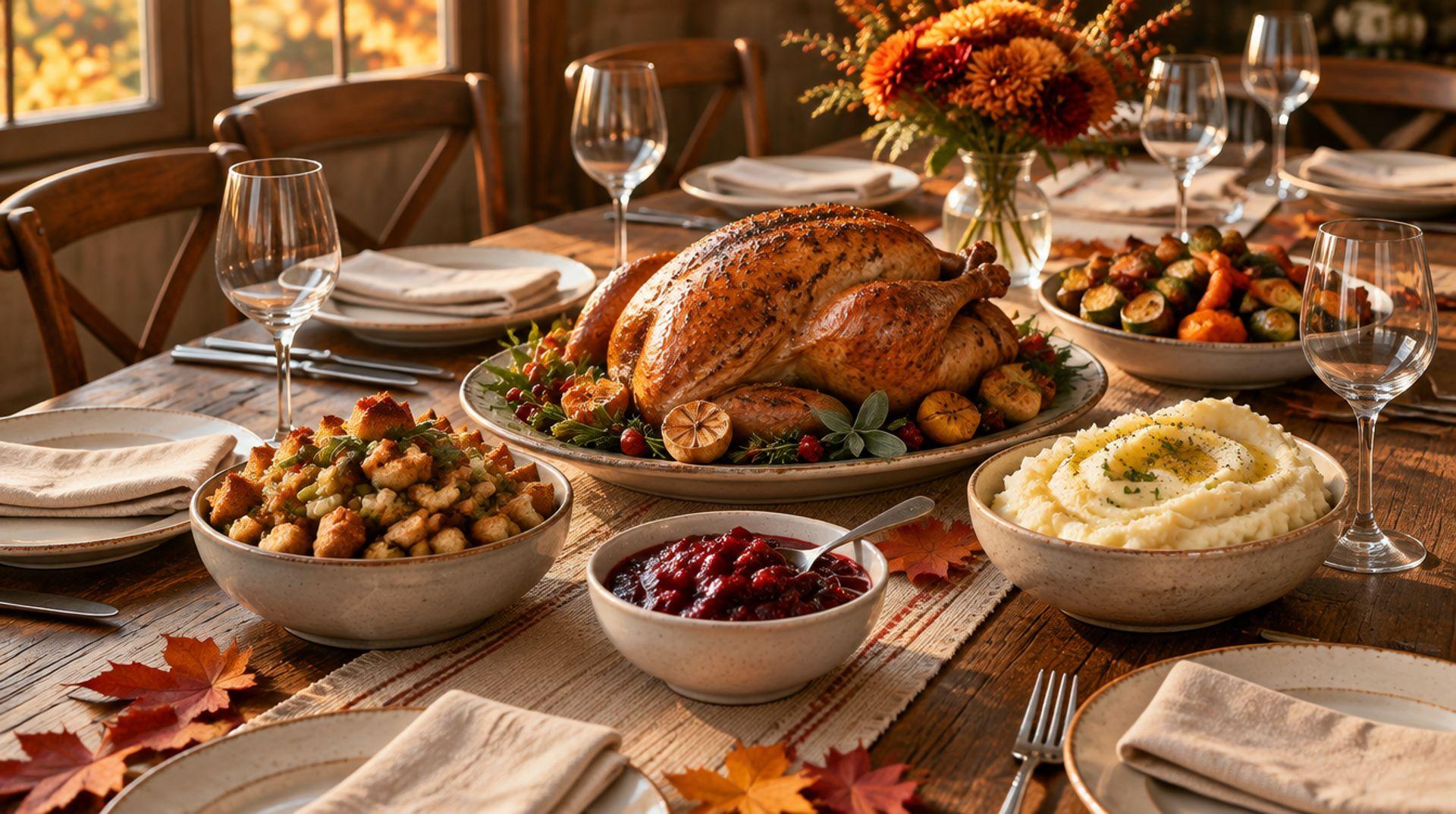
Match the sides, not the turkey. Cranberry sauce, stuffing, mashed potatoes and gravy mix sweet, tart, rich and savory on one plate, so look for a wine that is fruity, fresh and low in tannin. Styles that fit include Pinot Noir, Gamay from Beaujolais, a fuller dry rosé, Riesling with a little sugar and sparkling wine.[1],[2]
Why Thanksgiving is a tricky meal for wine
The Court of Master Sommeliers says the turkey is not the anchor. The cranberry sauce, stuffing, mashed potatoes and gravy are. As a group they are sweet, tart, rich and savory, and that mix calls for wines that are fruity, higher in acidity and lower in tannin.[1]
Three rules that do most of the work
- Match weight. A wine should be at least as full-bodied as the food it sits next to, or it tastes pale. A heavy, buttery plate wants a wine with some body, and a wine so big it flattens the gravy is just as bad.[2],[1]
- Let the wine be at least as sweet as the dish. A dry wine next to something sweet tastes bitter and stripped of fruit. That matters with candied sweet potatoes, sweet cranberry sauce and pie.[1],[2]
- Keep tannin low and acidity fresh. Fat and protein in food mute tannin, but only if they are there. Rich food also needs a wine with enough acidity to refresh your mouth between bites.[2],[1]
WSET puts the goal in one line: for most people, a good match is one that makes the wine taste softer, sweeter and fruitier. Foods high in salt, acid, sugar or fat change how a wine tastes, so the same wine can taste different with and without food.[3]
Five styles that fit the whole plate
These are styles, not labels. Any wine made in the style will do the job, from any producer.[1]
- Pinot Noir. A red with low tannin and bright acidity, so it has more range at the table than most reds. Its earthy side also echoes the mushrooms in a stuffing.[1],[2]
- Gamay from Beaujolais. A light, fruity red that the Court of Master Sommeliers lists for Thanksgiving. Light reds do best served a little cool.[1],[2]
- A richer dry rosé. Another style the Court of Master Sommeliers lists for Thanksgiving. It is served chilled, like a white.[1],[2]
- Riesling with a touch of sugar, called off-dry. The sugar softens salty and sweet-savory food. A Virginia university guide uses off-dry Riesling as its example for balancing the salt in ham.[1],[2]
- Sparkling wine. Bubbles and acidity cut through fat, salt and richness. When one bottle has to work across a whole table of different dishes, sparkling is the one the Court of Master Sommeliers points to.[1],[2]
What to watch out for
Big, tannic reds are the usual mistake. The Court of Master Sommeliers says the tannin in a Cabernet Sauvignon is tamed by a well-marbled cut of red meat, and turns harsh and drying next to a lean protein.[1]
Dry, thin whites can struggle too. Sweet foods can make a dry wine taste thin and sour, and an acidic food like cranberry sauce can make a wine seem flat.[2],[1]
High alcohol is the third trap. A strong, warm-tasting wine makes food harder to match, while low to moderate alcohol helps refresh the palate. Heavy salt can also push rough tannins and sharp acidity further.[2]
How cold to serve it
Temperature changes how a wine tastes. Cold hides sweetness and brings out acidity, and it also makes red-wine tannins feel stronger. The Virginia university guide gives these serving ranges.[2]
Try it on your own plate
WSET suggests a simple experiment. Taste a wine and note how it feels, then take a bite of food and taste it again. Salt, acid and fat on your palate change what the wine does.[3]
The Virginia guide ends with one rule: drink what you enjoy. It also says successful pairing is subjective, more like an experimental art than a science.[2]
Sources
- Court of Master Sommeliers Americas, How to Pair Wine With Food Guide. Read .
- Virginia Tech, Department of Food Science and Technology (Enology and Grape Chemistry), Matching Table Wines with Foods. Read .
- WSET, Four rules for food and wine pairing. Read .
How we write these
Grapeling articles are researched, written and fact-checked with AI help. Every claim is compared against the sources above before an article goes live. We write about grapes, regions, styles and technique, never about brands or where to buy.
For adults of legal drinking age: 21+ in the US, 18+ in the UK. Please drink responsibly, or not at all.