Lessons you can touch.
Short lessons, from what wine is to tasting two wines side by side. Every picture is live: drag it, tap it, stop it, pour it. Each one takes about three minutes, and every tasting task works without alcohol.
Level 1 · Sprout
13 of 13 lessons open
 Lesson 1What even is wine?Ripen grapes with the sun, feed yeast under a lens, stop fermentation early, then pop a cork.
 Lesson 2Why wine doesn't taste like grapesSqueeze smells out of three grapes, let yeast make new ones, then match them to fruit.
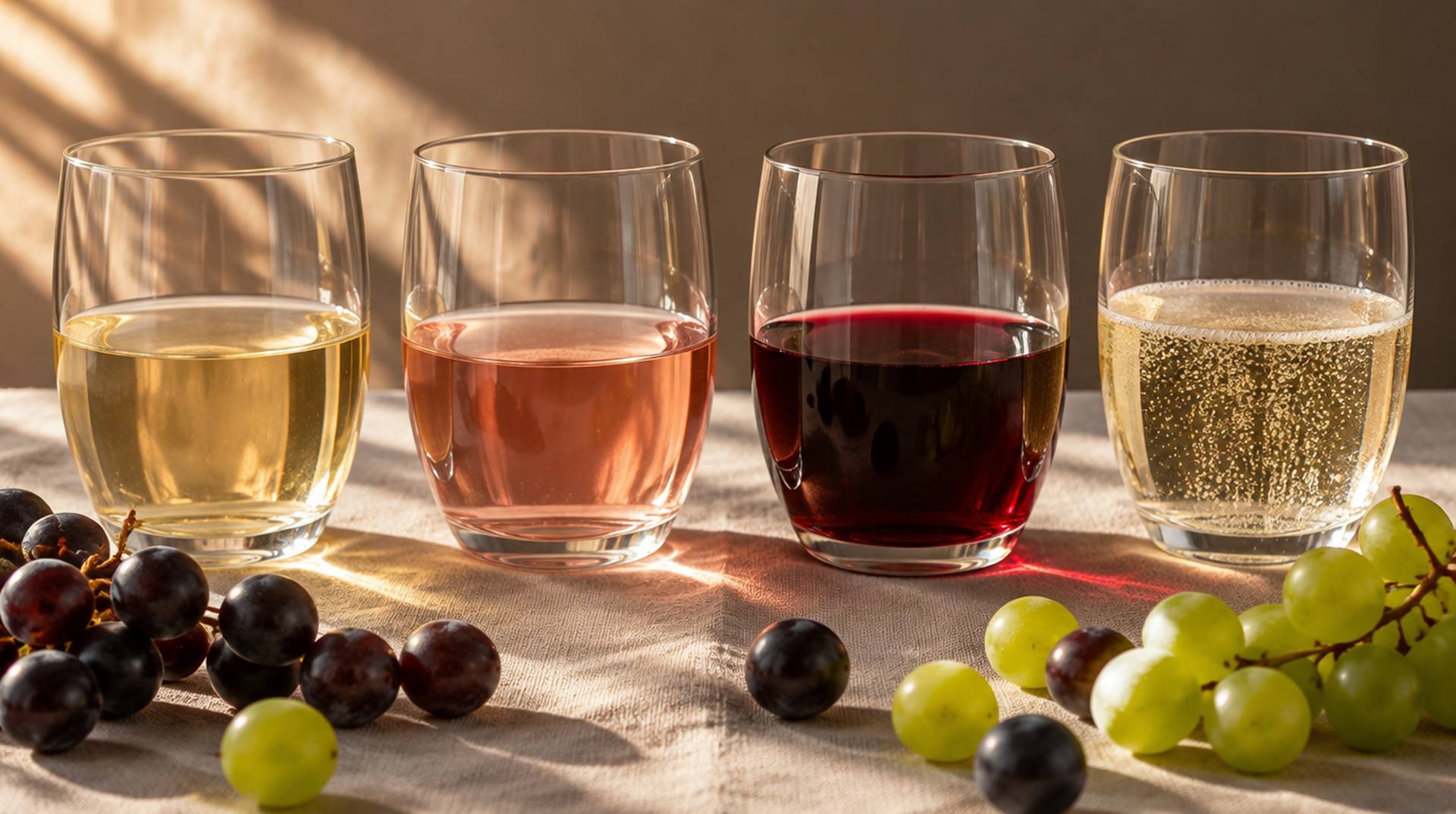 Lesson 3Red, white, rosé, bubblesSlice a dark grape, steep skins until the juice turns red, then match three shades of rosé by the hour.
 Lesson 4Sweet vs dryWatch yeast eat the sugar, then put sugar and acid on a scale and see which side wins.
 Lesson 5Acid: the mouthwatering oneWhat acidity in wine does: find the two acids inside a grape, turn up the sharpness, and wash a rich bite away.
 Lesson 6Tannin: the dry-mouth oneWhat tannin in wine is: steep skins, seeds and tea, and feel it grab the smooth coat in your mouth.
 Lesson 7Body: skim milk vs creamTurn up alcohol and tannin, sort wines onto a lighter or fuller shelf, then chill one and feel it thin out.
 Lesson 8Your first five wordsBuild a wine in four words and one smell, then describe a mystery glass from clues.
 Lesson 9How to read a label without panicHow to read a wine label: take a made-up one apart, blend below the 75% line, and sort grape names from place names.
 Lesson 10Glass, temperature, openingWine serving temperature made simple: put four wines in order, chill one until it goes quiet, and open a bottle the calm way.
 Lesson 11Wine and food: the two rulesLet acid cut through a rich bite, turn alcohol down for spicy noodles, and match a dessert's sweetness.
 Lesson 12Wine and your bodyHow many standard drinks are in a glass and a bottle of wine, and what the health agencies actually say.
 Lesson 13Now you can: order at a restaurantHow to order wine at a restaurant: say what you like in three words, point at your budget, ask one good question.
Level 2 · Taster
16 of 16 lessons open
 Lesson 14Look: what color tells youHow to taste wine, step one: tilt the glass over white paper, read the rim, and guess a wine's age and grape from its color.
 Lesson 15Smell: swirl, sniff, name itWhy you swirl wine, how to sniff it, and how to sort what you smell into fruit, flowers, herbs and toast.
 Lesson 16Taste and conclude: your first tasting noteSip, check sweetness, acid, tannin, body and finish, then write a wine tasting note in one honest line.
 Lesson 17Chardonnay: the shape-shifterOne grape, two wines: crisp and appley from a cool place, rich and buttery after oak and malolactic fermentation.
 Lesson 18Sauvignon Blanc: green and zingySauvignon Blanc taste explained: where the cut-grass and green pepper smells come from, and how sun, shade and picking day change it.
 Lesson 19Riesling: bone dry to very sweetA high-acid grape that can be bone dry or sweet as honey. Learn how to tell which one you're getting.
 Lesson 20Pinot Grigio and Pinot Gris: one grape, two stylesSame grape, two names: light and crisp as Pinot Grigio, rounder and riper as Pinot Gris.
 Lesson 21Pinot Noir: light red, big reputationWhat is Pinot Noir? Pale color, red-fruit smells and a cool place to grow: what makes it different from other reds.
 Lesson 22Merlot: soft and plummyWhat is Merlot? Why it's called the soft one: plum fruit, a gentle feel, and the Bordeaux blend that made it famous.
 Lesson 23Cabernet Sauvignon: the firm oneCabernet Sauvignon taste explained: small berries and thick skins give deep color and firm tannin, plus a blackcurrant smell and a surprising family tree.
 Lesson 24Syrah and Shiraz: pepper and dark fruitSyrah vs Shiraz: one grape, two names. Dark fruit, and where the black pepper smell comes from.
 Lesson 25Sparkling wine: how the bubbles get inHow sparkling wine is made: a second fermentation in the bottle or in a big tank, and why the bubbles differ.
 Lesson 26Sweet and fortified winesThree ways to make a sweet wine, and what fortified means: why some wines get a dose of grape spirit.
 Lesson 27Faulty, or just not for you?How to tell if wine is bad: corked, oxidized or cooked, how to store wine so it stays good, and when it's just taste.
 Lesson 28Wine and food, one step furtherWine and food pairing: match weight with weight, see why fat softens tannin, and why some wines taste fishy with seafood.
 Lesson 29Now you can: taste two wines side by sidePut everything together: taste two wines one step at a time, compare them, and say which you prefer and why.