Getting started · 4 min read · 21+ US · 18+ UK
How to taste wine without feeling silly
How to taste wine in five calm steps: a small pour, a look, a swirl, a sniff, a slow sip. Why your nose does most of the work, and how to practice without wine.
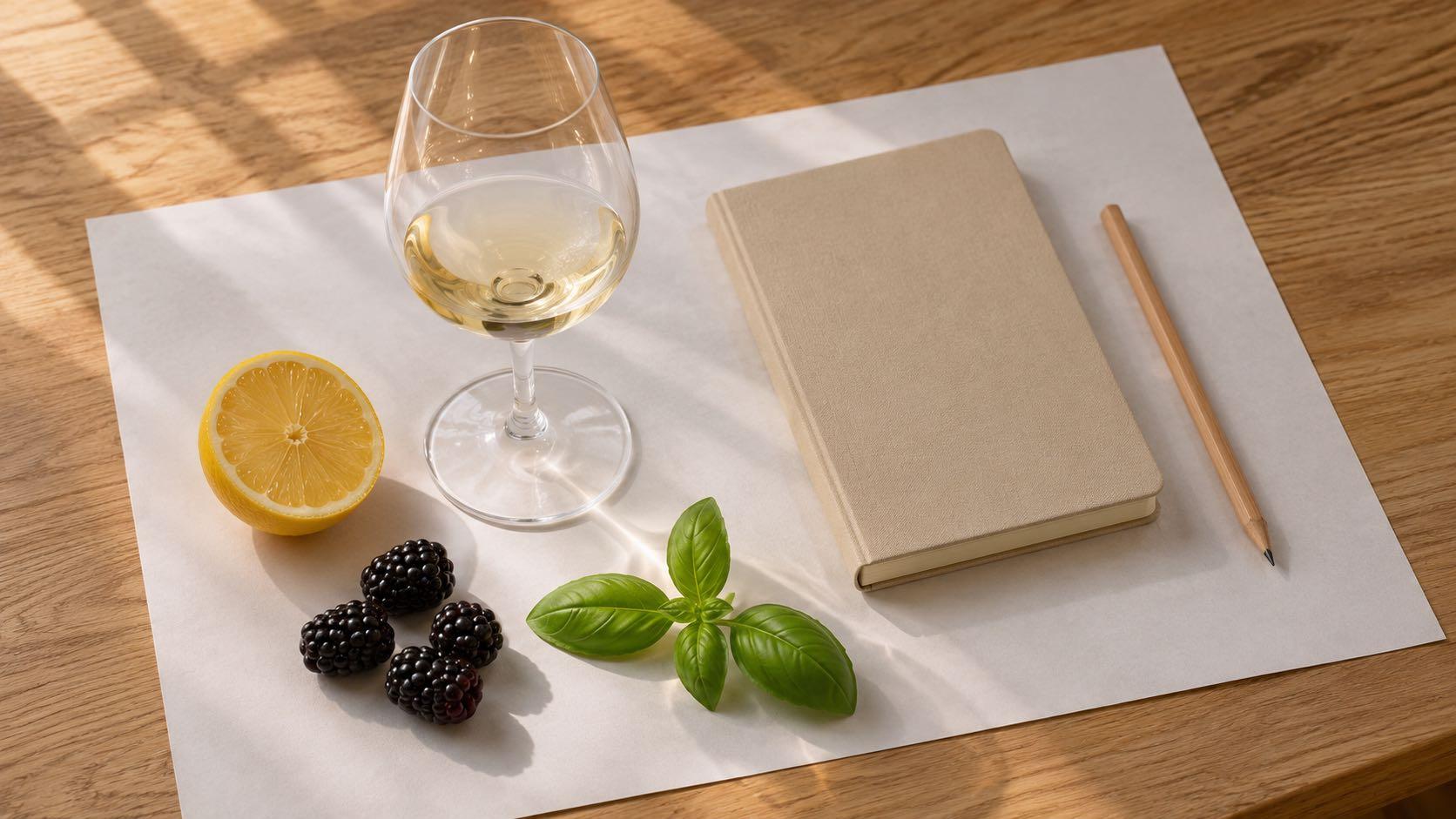
The short answer
Pour a small amount, look at it, swirl, smell, then take a small sip and pull a little air through it. Your tongue only picks up sweet, sour, salty, bitter and savory. Most of what you call flavor is smell, reaching your nose from the back of your mouth, which is why the swirl and the slow sip matter.[1],[5],[2]
Start with a small pour
Tasting pours are small for a reason. You need empty space in the glass to swirl the wine, and a full glass leaves no room.[1]
Tasting handbooks suggest filling the glass about a quarter to a third of the way. The glass matters too: pour the same wine into a straight tumbler and a tulip-shaped wine glass, and you may notice a difference.[6],[2]
Your surroundings matter too. Light, noise, the temperature of the room and what you just ate all change what you notice. A smoky grill next to you will win every time.[2]
Look at it
Wine courses ask three simple things here: is it clear or hazy, is the color pale or deep, and what color is it.[3],[4]
The color words are short lists. For white wine, the sommelier exam grid uses straw, yellow and gold. For red, it uses purple, ruby and garnet.[4],[3]
A hazy wine can be a sign that something went wrong. The WSET grid marks a hazy wine with a question mark: faulty?[3]
Swirl, then smell
Smell the wine once while it sits still. Then swirl it and smell again. The aromas start out in the liquid, and swirling mixes them into the air in the glass, where your nose can find them.[1],[6]
It is easier to swirl with the glass on the table, and safer for your shirt. A gentle swirl is enough.[1]
Then ask how strong the smell is, from light to pronounced, and what it reminds you of. Start broad and narrow it down: citrus first, then maybe lemon or grapefruit.[3],[2]
- Fruit. For whites, think apple and pear, citrus, stone fruit like peach, or tropical fruit. For reds, think red, black or blue fruit.[4],[3]
- Then flowers and herbs, like rose, violet, mint or fresh grass.[3],[4]
- Things from winemaking: vanilla, toast or smoke from oak, or bread and butter notes.[3],[4]
- Things from age: dried fruit, nuts, mushroom, leather or earth.[3],[4]
Take a small sip and let air in
Your tongue can only pick up sweet, sour, salty, bitter and savory, also called umami. Everything else you call flavor, like cherry or vanilla, is smell.[5],[2]
That smell travels from the back of your throat up into your nose. It is why food tastes flat when you have a cold and your nose is blocked.[5],[1]
So tasters pull a little air in through the wine while it is in their mouth, then breathe out through the nose. It works like a swirl, just inside your mouth. Keep the sip small, or you will end up with a mouthful and nowhere to put it.[1]
Sip size makes a difference you can measure. In a lab study that mimicked the mouth, using real human saliva, small and large sips of the same white wine released different aroma compounds.[6]
Notice how it feels
After flavor, tasting grids ask about structure: the parts you feel more than smell.[3],[2]
Say what you found
The last step is a short conclusion. The sommelier exam grid even asks candidates to pitch the wine to a guest in two sentences or less.[4],[3]
Tasting is a skill you learn, like swimming, not a gift you are born with. One of the best ways to get better is to compare things side by side, two glasses at once rather than one on its own.[2]
You can practice every day without wine. Smell your coffee, a handful of blackberries or the spices in a dish, and put words to what you find.[2]
Sources
- WSET, How to taste wine: a guide. Read .
- WSET, How to train your palate. Read .
- WSET, Level 3 Systematic Approach to Tasting Wine. Read .
- Court of Master Sommeliers, Americas, Certified Sommelier deductive tasting grid. Read .
- National Institute on Deafness and Other Communication Disorders (NIH), Taste disorders. Read .
- Food Research International, Sip volume affects oral release of wine volatiles (Genovese et al., 2015). Read .
Keep reading
- Should red wine be chilled? A little, and not like your white
- What is Beaujolais Nouveau? The wine with a release date
- What wine goes with Thanksgiving dinner? Start with the sides
Or start from the beginning with the free level 1 course: 13 short, hands-on lessons.
How we write these
Grapeling articles are researched, written and fact-checked with AI help. Every claim is compared against the sources above before an article goes live. We write about grapes, regions, styles and technique, never about brands or where to buy.
For adults of legal drinking age: 21+ in the US, 18+ in the UK. Please drink responsibly, or not at all.