Getting started · 3 min read · 21+ US · 18+ UK
What are tannins in wine? That dry grip, explained
Tannins are the drying, grippy feeling a red wine leaves on your gums. Where they come from, how to describe them, and a tea test to try at home.
The short answer
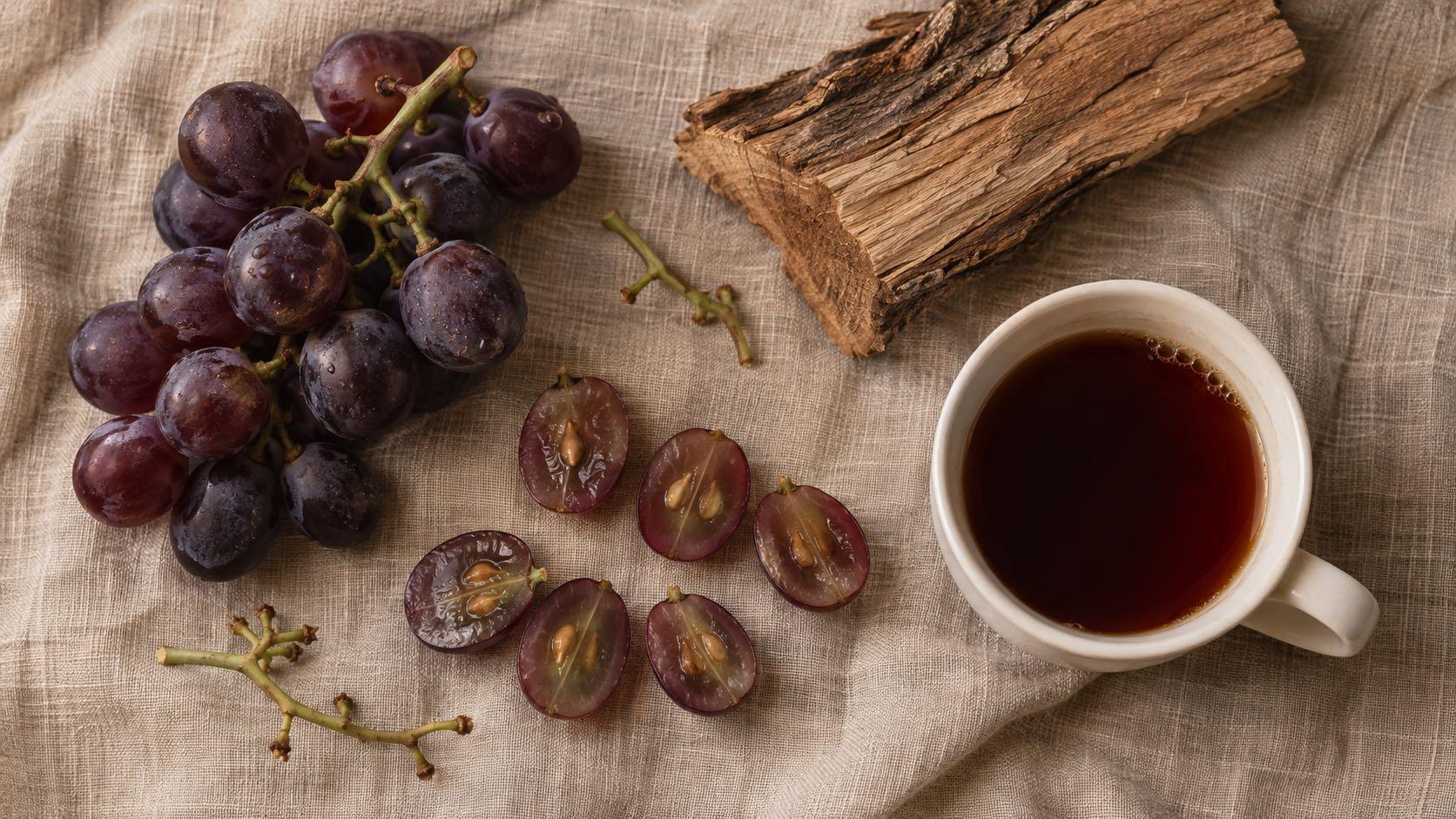
Tannins are natural plant compounds from grape skins, seeds and stems, plus a little from oak barrels. In wine they bind to the proteins in your saliva, which is why a tannic red leaves your gums dry and grippy, a lot like strong black tea. Red wines have far more than whites because the juice sits on the skins.[2],[3],[1]
What tannin feels like
Tannin is a feeling more than a flavor. Sip a young red, and your gums and the inside of your cheeks go dry and a little rough. Wine scientists call that astringency.[3],[1]
It happens because tannins grab the proteins in your saliva. They clump together and drop out, so your mouth loses its slippery coating. Less slip means more friction, and your brain reads that as dry.[1],[3]
You know the feeling already from unripe fruit and strong tea. The name is old, too: tannin-rich bark was used to turn animal hides into leather, because tannins bind to the protein in skin.[2],[3]
Dry feeling or bitter taste?
People mix up tannin and bitterness all the time, and it is easy to see why: many wine compounds are both. Bitterness is a taste on your tongue. Astringency is a texture you feel.[3]
The size of the tannin pieces plays a part. The smallest ones, found mostly in seeds, taste more bitter. Long tannin chains feel more drying.[1],[3]
The rest of the wine changes how tannin comes across. Alcohol makes it seem softer, and acidity makes it seem harsher.[3]
Where tannin comes from
- Grape skins. Skin tannins are long chains that feel ripe and drying.[3]
- Grape seeds. These tannins are shorter and more bitter, and they take longer to come out during winemaking.[1],[3]
- Stems. When stems go into the tank with the grapes, they add tannin too.[3]
- Oak barrels. Oak adds its own kind of tannin, but only a small amount compared with the grapes.[3],[4]
Red wine gets most of its tannin because the juice soaks with the skins and seeds for days or even weeks. A longer soak pulls out more tannin.[2],[1]
White grapes have about as much tannin in their skins as red grapes. White wine feels smooth because the juice is pressed off the skins quickly. Make a white wine the red way, with skin contact, and you get orange wine, which has noticeably more grip.[3]
Which grapes bring the most
Grape variety matters. One study measured tannin in 1,325 red wines from the US, Australia and France. On average, Cabernet Sauvignon had the most and Pinot noir the least.[5]
Average tannin by grape in that study, ranked (not to scale)[5]
- Cabernet Sauvignon
- Zinfandel
- Merlot
- Syrah
- Pinot noir
The averages hide a big spread. Within a single grape, some wines had more than 10 times the tannin of others, so the groups overlapped. Both growing conditions and winemaking choices move the number.[5],[1],[3]
Why tannin softens with age
Young reds often feel firm. After some years of aging, the tannins usually feel finer and smoother.[3],[4]
Nobody has fully proven why. One idea is that tannins link up with the wine's red pigments, and those linked pieces feel softer. More recent research suggests the tannin chains get shorter over time, but the final answer is still open.[4],[3]
How to talk about tannin at a restaurant
Wine courses rate tannin on a simple scale. The WSET tasting grid uses five steps: low, medium(-), medium, medium(+) and high.[6]
For texture, tasters reach for words like fine-grained, powdery, grippy, coarse and drying.[3]
Sources
- Iowa State University Extension and Outreach, Midwest Grape and Wine Industry Institute, Tannins in grapes. Read .
- Wine Australia, Tannin management in the vineyard. Read .
- GuildSomm, Guide to phenolics. Read .
- Washington State University, Viticulture and Enology, Grape and wine phenolics: a primer. Read .
- American Journal of Enology and Viticulture, Variability of tannin concentration in red wines (Harbertson et al., 2008). Read .
- WSET, Level 3 Systematic Approach to Tasting Wine. Read .
How we write these
Grapeling articles are researched, written and fact-checked with AI help. Every claim is compared against the sources above before an article goes live. We write about grapes, regions, styles and technique, never about brands or where to buy.
For adults of legal drinking age: 21+ in the US, 18+ in the UK. Please drink responsibly, or not at all.